The Wesson Family: When Religious Delusion Weaponized a Cult-Like Dynasty of Incest and Murder
A Patriarch’s Absolute Control Over Three Generations Culminated in the Execution of Nine Family Members, Including Infants
On March 12, 2004, in Fresno, California, Marcus Delon Wesson, a 57-year-old man who claimed to be Jesus Christ and called himself the “Vampire God,” orchestrated the execution-style murder of nine family members—two adult daughters and seven children ranging in age from one year old to eight years old—in what would become the worst mass murder in Fresno’s history. The crime did not occur in a moment of rage or spontaneous violence. It occurred after decades of systematic abuse, sexual exploitation, incest across three generations, religious indoctrination, physical brutality, and the establishment of an explicit murder-suicide pact that Wesson had forged with his children through psychological coercion so complete that he maintained absolute dominion over their lives and deaths.
The peculiar horror of the Wesson case lies not merely in the murders themselves, but in the deliberate architecture of abuse that preceded them—a system so psychologically sophisticated, so religiously justified, and so physically isolating that Wesson was able to maintain total control over his family while living in poverty in central California, supported by welfare fraud and forced contributions from adult working children, for over thirty years. It is a case that exposes how institutional racism, homeschooling without oversight, and the complete absence of mandatory reporters can allow evil to fester in plain sight.
The Perpetrator: Marcus Delon Wesson, Architect of a Dynasty of Abuse
Marcus Delon Wesson was born on August 22, 1946, in California. He served in the U.S. Army as a medic and was stationed in Vietnam during the war. After his discharge around 1965-1966, Wesson moved in with an older woman named Rosemary Solorio and her eight children in San Jose, California. Rosemary Solorio would bear Wesson a son in 1971. But his true focus would become her daughter Elizabeth.
When Elizabeth was eight years old, in 1974, Marcus Wesson began sexually abusing her. For six years, he groomed her, normalizing his sexual contact as “fatherly affection” and “acts of love.” When Elizabeth turned fourteen in 1980, Wesson “married” her in an informal ceremony. Four months later, Elizabeth was pregnant with her first child. Wesson was 34 years old.
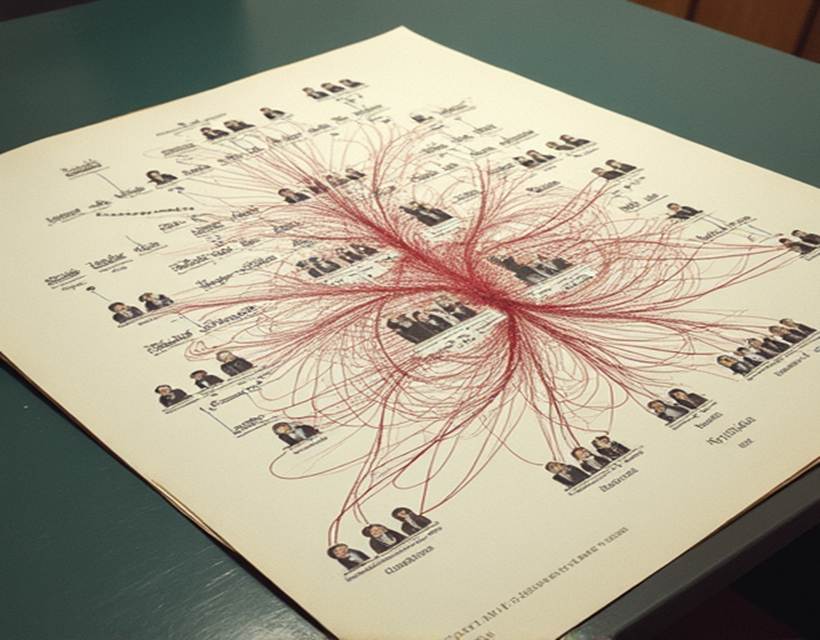
Wesson would father ten children with Elizabeth over the course of their “marriage.” But this would only be the beginning of his sexual predation. Over the next thirty years, Wesson would also sexually abuse and father children with at least three of Elizabeth’s sisters (his nieces) and at least three of his own daughters—creating a genealogical nightmare in which children were simultaneously his sons/daughters, grandchildren, nephews/nieces, and cousins, united only by the threads of his abuse and the perverted religious ideology he used to justify it.
The Religious Justification and Delusions
Wesson was a high school dropout who taught himself Biblical interpretation through the lens of Seventh Day Adventist theology, which he perverted into a system of beliefs that justified polygamy, incest, sexual abuse, and absolute patriarchal control. He told his children that he was Jesus Christ reincarnate. He told them he was a god. He told them the world outside the family was filled with sin and danger, and that he alone could guide them to salvation. He taught that his daughters were “destined to become his future wives.” He explained sexual contact with children as necessary religious education.
When his daughters reached ages seven or eight, Wesson began teaching them oral sex as part of his “curriculum.” As they aged, he moved to full intercourse. He rationalized it all as religious instruction, as fatherly love, as necessary preparation for their role as his wives and the mothers of his children.
When psychiatrists later examined Wesson, they found him to be “psychotic, delusional, and narcissistic.” His surviving sons, Adrian, Serafino, and Dorian, would eventually say that only years after the murders could they see their father for what he truly was: not a patriarch, but a monster.
The System of Control
Wesson maintained absolute dominion over his family through multiple mechanisms of control that worked in concert to eliminate the possibility of escape or resistance:
Physical Isolation: The family moved frequently—from boats to vacant houses to derelict buses to rundown shacks. They lived in extreme poverty, often homeless or near-homeless. Wesson never held steady employment. He lived on welfare fraud (for which he was convicted in 1989 but received minimal consequences) and by forcing his adult working children to surrender all their earnings to him.
Homeschooling Without Oversight: Wesson homeschooled the children, removing them entirely from the oversight of mandated reporters—teachers, counselors, school nurses, coaches. Without regular contact with outside authority figures, the children had no one to report the abuse to, no one to notice the psychological and physical deterioration, no one to intervene.
Sexual Abuse and Reproductive Control: Wesson sexually abused all of his daughters and at least three nieces beginning at ages seven or eight. He “married” them in informal ceremonies and impregnated them. The children born from these incestuous relationships further entangled the victims in the family system, as each child represented another link to the perpetrator, another reason to stay, another source of guilt if the victim contemplated escape.
Religious Indoctrination: Wesson twisted Christian and Seventh Day Adventist theology into a system that positioned him as a divine authority. He preached daily to the family. He taught that disobedience would be punished by God. He taught that the family must stay together no matter what, because separation meant damnation. He explicitly taught: “It’s better to die than have the government or some agency break up the family. Are you ready to die? If [Child Protective Services] ever comes in, we are to kill the kids and kill ourselves so we can be with the Lord.”
Physical Brutality: Wesson beat his children with sticks and baseball bats. He choked Elizabeth when she expressed desire to leave with the children. He punished girls severely for any contact with boys their own age. Physical pain reinforced the message of absolute obedience.
Domestic Slavery: Children were assigned specific roles. The girls were forced to serve Wesson’s needs—washing his dreadlocks, scratching his armpits and head, catering to his demands. All children performed farm work and household labor. They were not allowed to speak to male siblings. They were not allowed to interact with their mother freely. Wesson dictated what they could eat, when they could speak, when they could use the bathroom.
Financial Control: Wesson controlled all money. He forced working adult children to give him all their earnings. He decided what food could be purchased—often buying fast food for himself while children went hungry, scavenging from garbage cans for meals. The children had no financial independence, no means of escape.
The Fresno home where Marcus Wesson murdered nine family members on March 12, 2004 (the house was later demolished)
The Victims: Nine Lives Erased by Incest and Murder
The nine people murdered on March 12, 2004, were not merely statistics or names on a crime report. They were individuals—a 25-year-old woman, a 17-year-old girl, and seven children. Their genealogical relationships to Marcus Wesson were so tangled by incest that describing them requires multiple family terms simultaneously: daughter, granddaughter, niece, grand-niece, nephew, grand-nephew. They were the living embodiment of Wesson’s three-decade campaign of sexual predation and reproductive exploitation.
Adult Victims
Sebhrenah April Wesson (25)
Sebhrenah was the eldest of the murdered victims and the biological daughter of Wesson and his legal wife Elizabeth. She was born into a family already controlled by Wesson, already shaped by his religious delusions and abusive practices. By the time she was an adult, Sebhrenah had witnessed or experienced the abuse of everyone in the household. She may have been sexually abused by her father; sources are unclear. What is certain is that she was a victim of his psychological manipulation, his coercive control, and ultimately, his decision to kill her along with her siblings rather than allow governmental intervention to break up the family.
Neighbors and those who knew Sebhrenah noted that she was fascinated with weapons. She carried cartridges and knives in her purse. She played “Army,” painting her face green and black in camouflage patterns. This fascination with weapons and survival would become central to the defense’s explanation of the murders: that Sebhrenah, not Wesson, had pulled the trigger and killed her eight siblings before killing herself in a suicide act orchestrated by her father’s psychological conditioning.
Manner of Death: Shot through the right eye; body found atop the pile of victims; murder weapon (.22 caliber Ruger Mark II pistol) found beneath her body.
Elizabeth Breahi Kina Wesson (17)
Elizabeth was the biological daughter of Wesson and his legal wife (also named Elizabeth). She was also referred to in trial testimony as a “daughter wife,” suggesting she may have had a sexual relationship with her father. Like her older sister Sebhrenah, Elizabeth had grown up in a household of abuse, isolation, incest, and religious fanaticism. She would have understood from a young age that defiance meant physical pain, that escape meant abandonment of her siblings, that the family unit—however twisted and destructive—was the only reality she had ever known.
Elizabeth Breahi Kina Wesson was seventeen years old when she was murdered. She had not yet had the opportunity to leave the family, to build an independent life, to discover who she might have become in a world free of her father’s control.
Manner of Death: Shot through the right eye; body found with her older sister Sebhrenah; coroner evidence suggests she died approximately one to two hours after the younger victims.
Memorial tribute to the nine victims of the Marcus Wesson murders
Child Victims
Illabelle Carrie Wesson (8)
Illabelle was eight years old at the time of her death. She was simultaneously Wesson’s daughter and his granddaughter—a biological daughter born to one of his daughters through his sexual abuse of that daughter. Illabelle represented the horrifying culmination of three generations of incestuous abuse: she was born from her grandfather’s rape of her mother (who was his daughter). She had never known any world except Wesson’s household. She would never become who she might have been.
Manner of Death: Shot through the right eye; among the younger victims killed first (timeline evidence suggests death approximately one to two hours before the adult victims).
Aviv Dominique Wesson (7)
Aviv was seven years old. She was simultaneously Wesson’s daughter and his grand-niece—born through his sexual abuse of one of his nieces. Like every child in the household, Aviv had been groomed from infancy to accept the abuse, the isolation, the religious indoctrination, the hierarchy of Wesson’s absolute dominion. She had known only fear and obedience.
Manner of Death: Shot through the right eye.
Jonathon St. Charles Wesson (7)
Jonathon was seven years old, the biological son of Wesson and one of his nieces. He was also the child of Sofina Solorio, Wesson’s niece, who had come to the house on March 12, 2004, to retrieve her son. Sofina managed to grab Jonathon’s hand and begin walking toward the door with him, only to have another family member snatch him away, place him in a back bedroom, and lock him in to die.
Jonathon would be shot through the right eye along with the other victims. His mother would spend the rest of her life knowing that she came within seconds of saving her son, but failed.
Manner of Death: Shot through the right eye.
Marshey St. Christopher Wesson (18 months)
Marshey was eighteen months old—a toddler. He was the biological son of Wesson and one of his daughters. He had barely begun to exist in the world when his father executed him. Marshey would never remember his mother’s voice, would never learn to speak, would never take his first unassisted steps, would never experience childhood beyond the abuse and isolation of Wesson’s home.
Manner of Death: Shot through the right eye.
Jeva St. Vladensypry Wesson (1)
Jeva was one year old—an infant. Jeva’s unusual name (St. Vladensypry) reflects Wesson’s religious obsession and his desire to control every aspect of his children’s identities, even their names. Jeva was so young that there is almost no individuality to record, almost no personality traits to note. Jeva was a baby, murdered by a grandfather who was also the father, because of a custody dispute and the patriarch’s determination that his family would not be separated by governmental authority.
Manner of Death: Shot through the right eye.
Sedona Vadra Wesson (18 months)
Sedona was eighteen months old, a granddaughter murdered along with her infant siblings and older relatives. Every detail about her life, except her name and age, is lost to history—a child erased before she could become herself.
Manner of Death: Shot through the right eye.
Ethan St. Laurent Wesson (4)
Ethan was four years old. He was old enough to understand fear, old enough to cry, old enough to understand that he was in danger. He was not old enough to escape or resist. He was Wesson’s grandson, one of the products of his incestuous abuse of his own daughters. He was shot through the right eye.
Manner of Death: Shot through the right eye.
The Trigger: March 12, 2004 – Custody Dispute and Standoff
For years, Wesson’s nieces Sofina Solorio and Ruby Sanchez had been attempting to escape his control and to retrieve their children from his custody. The process was slow and painful—the same psychological chains that bound Wesson’s wife and daughters also bound his nieces. But Sofina, in particular, had made progress. She had begun legal proceedings to regain custody of her seven-year-old son, Jonathon. On March 12, 2004, at approximately 2:00 p.m., Sofina, Ruby, and other family members arrived at Wesson’s Central Fresno residence in multiple vehicles. They came to retrieve the children Wesson had in his home. What happened next was captured in eyewitness accounts and police testimony. Sofina entered the house and found her seven-year-old son. She took him by the hand and began walking out of the house. But as she neared the door, another family member—her own sister Rosa—intercepted her. Rosa snatched Jonathon from Sofina’s hand and physically placed him in the back bedroom, locking him in with the other children. Confrontation erupted. Police were summoned. When officers arrived, they found Wesson at the front door, initially cooperative. He told them he would allow the children to leave. Then he said he would go retrieve the children from the back bedroom. He retreated into the house and locked the bedroom door behind him.
What happened next is disputed. Police testified they heard no gunshots during the approximately 80-minute standoff. But neighbors testified they heard gunshots being fired. Wesson told negotiators nothing. He remained in the back bedroom, alone with the children. After eighty minutes, Wesson emerged from the bedroom. His clothes were covered in blood. He surrendered to police without resistance. When police entered the bedroom, they found nine bodies stacked in a pile. Each victim had been shot precisely through the right eye. The murder weapon—a .22 caliber Ruger Mark II pistol—was found beneath the body of Sebhrenah. The bodies appeared to have been arranged deliberately. Antique coffins were visible in the room, suggesting morbid premeditation.
The Question That Haunted the Trial: Who Pulled the Trigger?
The Defense’s Theory: Sebhrenah as Perpetrator
Wesson’s public defenders, Peter Jones and Ralph Torres, presented a startling defense: Marcus Wesson did not pull the trigger. Their client’s 25-year-old daughter, Sebhrenah, had orchestrated the murders. Sebhrenah, they argued, was the one who had shot each victim through the right eye. Sebhrenah had then shot her seventeen-year-old sister Elizabeth, and finally turned the gun on herself in a murder-suicide pact.
This theory had evidentiary support:
Sebhrenah’s DNA was found on the murder weapon
No fingerprints were found on the weapon (neither Wesson’s nor Sebhrenah’s)
No gunpowder residue was found on Wesson’s hands at the time of arrest
Expert testimony suggested that Sebhrenah’s injuries were consistent with suicide
Expert testimony suggested a mark on Sebhrenah’s hand could have been made by her handling the weapon
Coroner evidence showed that Sebhrenah and Elizabeth died approximately one to two hours after the younger victims, suggesting they were killed last
Sebhrenah’s fascination with weapons was documented; she carried cartridges and knives in her purse; she played “Army”
But the defense’s theory required believing that a 25-year-old woman, raised under Wesson’s absolute control, shaped by decades of psychological manipulation and religious indoctrination, had spontaneously decided to murder eight siblings and her sister in a suicide act—without any evidence that she initiated this plan independently.
The Prosecution’s Theory: Wesson’s Coercive Control as Murder
Chief Deputy District Attorney Lisa Gamoian presented a different narrative. Yes, the physical evidence suggested that Sebhrenah may have held the gun. But Sebhrenah did not act independently. Wesson had established an explicit murder-suicide pact with his children through decades of psychological conditioning. He had told them repeatedly: “It’s better to die than have the government or some agency break up the family.” He had taught them that separation meant damnation. He had established himself as a divine figure whose authority superseded all other loyalties.
Gamoian argued that Wesson’s absolute dominion over his family meant he could coerce one of his adult daughters into pulling the trigger while he maintained the fiction of non-participation. The murder-suicide pact was his creation. The children’s willingness to die rather than be separated was his psychological achievement. Whether he physically pulled the trigger or coerced his daughter into doing it was, in Gamoian’s theory, irrelevant to his culpability.
Gamoian quoted testimony from multiple witnesses describing Wesson’s explicit establishment of the murder-suicide pact: “If [Child Protective Services] ever comes in, we are to kill the kids and kill ourselves so we can be with the Lord.”
The Jury’s Decision: Coercive Control as Responsibility
The jury deliberated for more than two weeks. They heard 50 witnesses testify over three months. They were presented with the tangled genealogies, the decades of abuse, the religious indoctrination, the explicit murder-suicide pact testimony. When the jury returned their verdict on June 17, 2005, they made a remarkable decision: they declined to find that Marcus Wesson had physically pulled the trigger. But they convicted him on all nine counts of first-degree murder anyway.
The jury’s verdict effectively held that Marcus Wesson was responsible for the murders through his coercive control, his psychological manipulation, his establishment of a murder-suicide pact, and his absolute dominion over his family members. Even if Sebhrenah had held the gun, Wesson had set the stage, orchestrated the pact, and ensured that the deaths would occur rather than allow governmental intervention to separate the family.
It was a legal precedent: a perpetrator could be convicted of murder without having pulled the trigger if their psychological coercion created the conditions for the murders.
The Aftermath: Surviving the Unsurvivable
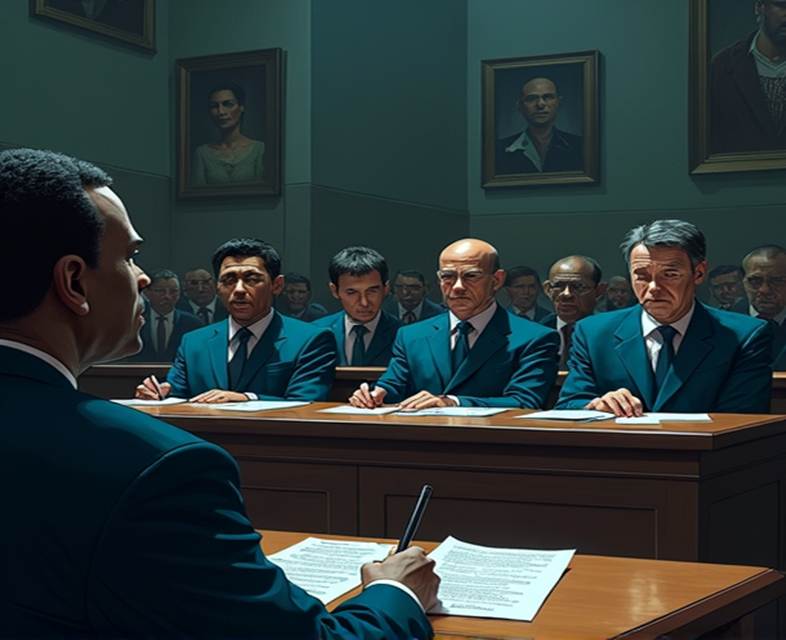
The jury that convicted Marcus Wesson deliberated for more than two weeks on nine counts of first-degree murder
The Legal Consequences
On June 27, 2005, Marcus Wesson was sentenced to death. He received multiple death sentences—one for each victim. He was transferred to San Quentin State Prison, where he remains on death row. Due to California’s moratorium on executions, he is unlikely to ever be executed, though he technically remains under sentence of death.
The Survivors’ Journey
Elizabeth, Wesson’s legal wife, eventually divorced him. The divorce was finalized in 2010, marking what she described as “symbolic closure” after more than fifty years of abuse (beginning when she was eight years old).
Her surviving children struggled with profound trauma:
Gypsy Wesson (surviving daughter): “I wished I could disappear, I didn’t want to exist.”
Kiani Wesson (surviving daughter): Had two children by her father; both were murdered. After the conviction, she could barely eat or sleep for two years. She gradually healed through counseling and support from loved ones, eventually learning that “it does get better.”
Adrian, Serafino, and Dorian Wesson (surviving sons): Took years to see their father for what he truly was. They eventually recognized him as “psychotic, delusional, and narcissistic.” Initially, some surviving sons had defended their father to reporters, not yet able to acknowledge the horrors they had endured.
All survivors noted that healing required time, professional counseling, and the support of people who believed them and validated their experiences.
The Systemic Failures That Allowed Three Decades of Abuse
Homeschooling Without Oversight
Wesson homeschooled his children, removing them from the oversight of mandated reporters. No teacher ever assessed whether Wesson’s “curriculum” was appropriate. No school counselor ever interviewed the children. No school nurse ever examined them for signs of abuse. The children were invisible to every system designed to protect them.
Welfare Fraud Consequences
In 1989, Wesson was convicted of welfare fraud and perjury. He had been living on welfare while maintaining a lifestyle that was incompatible with poverty. Yet this conviction had minimal consequences. The children were not removed. No intensive investigation of the home occurred. Wesson served minimal time and returned to his family.
No Mandatory Reporters
Because children were homeschooled and isolated, they had no regular contact with teachers, counselors, coaches, or doctors. They had no mandated reporters in their lives—no one legally required to report suspected abuse to authorities. Wesson had systematically eliminated the very professionals who might have noticed and intervened.
Moving to Avoid Accountability
Wesson frequently moved the family—from boats to houses to buses. This geographic mobility made it difficult for authorities in any single jurisdiction to build a case against him. He was able to exploit the lack of interstate information-sharing to remain ahead of suspicion.
Conclusion: Evil Disguised as Piety
The Marcus Wesson case stands as one of America’s most disturbing examples of how psychological manipulation, religious perversion, and complete social isolation can allow a single individual to orchestrate three decades of abuse, incest, and ultimately, mass murder. Wesson did not kill impulsively or in rage. He killed deliberately, after establishing an explicit murder-suicide pact with his children through decades of grooming, coercion, and psychological conditioning. He killed when a custody dispute threatened to expose his crimes and separate his family.
What makes the case particularly instructive is that none of this happened in secrecy or in a hidden location. Wesson lived in Fresno, California, a public place. He had interactions with neighbors, extended family members, and government agencies. Yet through a combination of his psychological sophistication, deliberate isolation tactics, exploitation of homeschooling loopholes, and systemic failures in child protection, he was able to maintain absolute control over his family for more than thirty years.
On March 12, 2004, nine people—a 25-year-old woman, a 17-year-old girl, and seven children—were executed by a man who had convinced them that death was preferable to separation, that obedience to him was obedience to God, that their lives had value only insofar as they served his needs. Two of those victims were infants. They had committed no transgression. They had made no choices. They were killed because they existed in a family controlled by evil.
Marcus Wesson remains on death row at San Quentin, where he will likely spend the remainder of his life. The house where the murders occurred was demolished. The surviving family members continue to heal.
But the nine victims—Sebhrenah, Elizabeth, Illabelle, Aviv, Jonathon, Marshey, Jeva, Sedona, and Ethan Wesson—remain dead, victims of a man who called himself a god but who was revealed to be something far worse: a psychotic predator whose absolute control over his family culminated in their absolute erasure.